Currency and first expenses
Use som for purchases and bring USD or EUR for official exchange. Arrange payment for your transfer and a reserve for your first expenses in advance.
Plan cash for your first expenses, check your card and understand the exchange options before you travel.
You need Uzbek som (UZS) for everyday spending. This guide explains which currency to bring, how to compare fees and what to check when crossing the border with cash.
Use som for purchases and bring USD or EUR for official exchange. Arrange payment for your transfer and a reserve for your first expenses in advance.
Check with the issuer that your card can be used in Uzbekistan, and keep a backup payment method separate from your main one.
Take your passport to the exchange counter and keep the bank receipt: non-residents may need it when exchanging som back into foreign currency.
Add up all your cash and check the declaration requirements and legal grounds for taking money out of the country for your residency status.
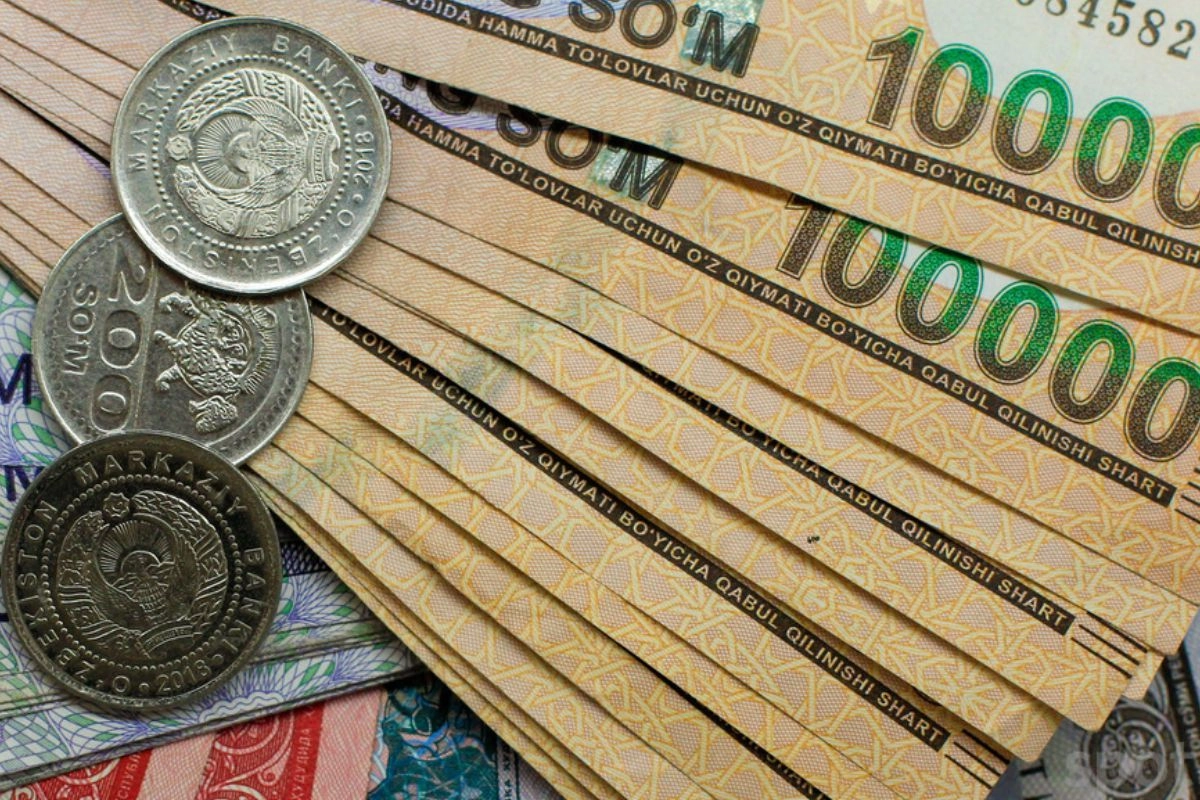
Uzbekistan's national currency is the som, with the currency code UZS. The current som entered circulation on 1 July 1994. One som is divided into 100 tiyin; current coin denominations are listed below.
Plan to pay for everyday purchases in som. US dollars or euros in cash can provide a reserve for official exchange; a card is an additional option once you have checked it with the issuing bank. Arrange any overseas payment for a tour separately with the organiser.
Banknote denominations are 1 000, 2 000, 5 000, 10 000, 20 000, 50 000, 100 000 and 200 000 som.
Coin denominations are 50, 100, 200, 500 and 1 000 som. You may therefore receive 1 000 som as either a banknote or a coin.
Different designs of the same denomination do not automatically mean that a note is invalid: for example, both the 2013 and 2021 designs of the 5 000-som note are in circulation. Paper 200- and 500-som notes have been withdrawn; coins of these denominations remain in circulation.
Keep smaller notes to hand for minor expenses, for example 1 000, 2 000, 5 000 and 10 000 som, along with coins. Before paying with a large note, ask whether the seller has change.
Bank rate tables include buying and selling rates for US dollars and euros. Before your trip, check that your chosen exchange point accepts your currency and offers the transaction you need. If you first buy USD or EUR with another currency, compare the final amount after all exchanges.
Ask your card issuer whether transactions in Uzbekistan are enabled, which withdrawal and payment limits apply, and how to reach support while abroad. Make sure you can access your banking app and authorise transactions. A Visa or Mastercard logo alone is not enough.
Plan cash for your transfer, food and other arrival expenses that have not already been paid. Keep a backup payment method separately. This prepares you for a declined card or unavailable exchange service; it does not mean carrying your entire budget in cash.
Buy and sell foreign currency through Uzbekistan's banks: at their cash desks, branches and official exchange offices. Some transactions are also available at bank ATMs. Before visiting, check the address, opening hours, currency and service you need. Do not assume that exchange is available at every stop on your route.
When you hand over dollars or euros and receive som, look at the bank's buying rate for foreign currency. To buy foreign currency with som, use its selling rate. Banks set these rates themselves and may change them during the day; the Central Bank's reference rate does not guarantee the same rate at the counter. Ask how much you will receive after the applicable charges and conditions. Rates can differ between a branch, app and ATM even within one bank. Compare the same currency, exchange direction and cash service you intend to use: the final amount you receive is what matters.
Take your passport and check which documents your transaction requires. Bring clean, intact notes: accepting damaged notes, assessing them and changing denominations may have separate conditions. Check the particular bank's rules rather than assuming that all notes from a certain year are rejected or that a single fee percentage applies everywhere.
Keep the bank's exchange receipt and other documents showing how you obtained som. A non-resident buying foreign currency with som needs documents proving the lawful source of those som in Uzbekistan; the amount exchanged is limited by the supporting documents. Count the money you receive. The bank receipt and your entry customs declaration serve different purposes and do not replace each other.
Supply and demand have played a greater role in exchange-rate formation since the 2017 reform. In its report of 23 June 2026, the IMF classified the de facto exchange-rate arrangement as floating, effective from 8 May 2025. The Central Bank smooths excessive short-term fluctuations; calculate your travel budget using the current rate.
Hours depend on the bank and the particular exchange point. For example, Ipak Yuli lists weekday hours of 09:00–17:00, with a 13:00–14:00 lunch break, for exchange offices in its branches. Before a weekend visit, ask the bank which location is open, at what times and for which transactions. App or ATM availability does not establish the cash desk's opening hours.
Find cash-desk addresses and phone numbers on the Ipak Yuli currency exchange page (Russian); to find an ATM, use Kapitalbank's address list (Russian). These are examples of official bank directories. Check your currency and transaction before visiting; for an ATM, also check card support, withdrawal currency and access to the machine.
If you need money on arrival, see the information for four airports. Confirm access to the relevant service at the time of your flight.
Before withdrawing cash, read about fees and what to do if an ATM transaction goes wrong. A directory listing does not guarantee cash availability or acceptance of your particular card.
Kapitalbank's directory lists an ATM at Islam Karimov Tashkent International Airport. Ask the airport information desk about the terminal and the locations of the exchange counter and ATM: +998 78 140 28 01. Give your flight and arrival time to check opening hours and access from your part of the terminal.
The airport website lists an OFB exchange office and ATMs operated by OFB and Kapital Bank. Ask the airport information desk about the service you need: +998 55 705 00 00. Before a night flight, check its hours and whether it is accessible after the relevant controls.
Ask the airport's communications service whether an exchange counter and ATM are available and where they are located: +998 65 228 91 09. Give your flight date and time and ask about opening hours and access from arrivals. Arrange payment for your transfer in advance.
Use the airport's general number to ask whether an exchange counter and ATM are available and where they are located: +998 62 224 59 59. Give your flight, date and time to check opening hours and access to the relevant area. Prepare a backup way to pay for your first expenses.
To check services, use the Tashkent airport contacts (Uzbek) and the Samarkand airport banks and ATMs page (Russian). These pages provide the relevant airport's contacts and service information.
For Bukhara, open the official airport contacts (Uzbek) and confirm the service you need before departure.
For Urgench, use the airport page on Uzbekistan Airports (Uzbek); check access to exchange or an ATM for the actual time of your flight.
A card's issuing country and the issuer's terms matter, rather than the holder's nationality. Visa and Mastercard cards issued by Russian banks cannot be used for transactions abroad under the restrictions announced by the payment networks and the Bank of Russia. Check a card issued elsewhere with your bank, and ask the seller whether it is accepted before paying. Do not rely on Mir or UnionPay without separate, up-to-date confirmation.
Some retail POS terminals support international cards: for example, Hamkorbank lists Visa and Mastercard acceptance for its UZCARD POS and HUMO POS terminals. This describes the capabilities of one bank's equipment, not a guarantee that every shop will accept every foreign card. Check acceptance before buying, verify the amount and currency on the screen and keep the receipt. Merchant acquiring fees should not be treated as a charge payable by the traveller.
Uzbek bank directories list machines supporting Visa and Mastercard. Check the specific address, payment network, cash currency and limits. A directory entry or sticker does not guarantee that the machine or cash will be available when you need it. Do not assume that every ATM dispenses US dollars.
The total cost of a withdrawal may include an ATM fee, your card issuer's fee and currency conversion costs. Check your tariff before travelling and read the screen before confirming. If offered conversion into your card's currency (DCC), compare the rate and markup: you can choose to be charged in UZS without conversion by the terminal. Your issuer's fees may still apply.
Read the decline message and bank notifications; contact the issuer or the bank operating the machine. Check the transaction status in your app and keep the receipt. For urgent spending, use your planned cash reserve or another confirmed payment option. Trying the next ATM is not guaranteed to solve the problem.
Contact the bank operating the ATM; if the machine is inside an open branch, ask the staff. Keep the receipt and the machine's details, and do not try to open it yourself. If the card is not returned and you no longer have control of it, promptly ask your issuer to block it or use the official blocking option in your app. Ask about the procedure for retrieving or replacing the card.
Keep the date and time, amount and currency, ATM address or code, transaction number and receipt. If only part of the cash was dispensed, record what you received. Check the status in your app: a pending transaction is not yet a final debit. Notify the ATM operator and your card issuer. If the debit is complete, ask the issuer how to submit a claim or dispute and how long it will be reviewed; there is no single refund deadline for every card.
Start with what is already paid for: accommodation, transport between cities, excursions and transfers. Then add the expenses you expect before the next place where you can exchange or withdraw money, plus your own reserve. Daily spending depends on your itinerary, travel party and included services; one budget does not suit every traveller.
Before visiting markets, making roadside stops or travelling to smaller towns and villages, prepare som in denominations suitable for small purchases. Check in advance whether a terminal is available and accepts your card. Count your remaining cash a few days before departure: allow for final expenses and leave time for official exchange back into foreign currency if needed.
There is no limit on the amount of cash you may bring in. If the combined value of all imported banknotes and coins, including som and foreign currencies, exceeds the equivalent of 100 million som, you need a passenger customs declaration stating the entire amount. At 100 million som or less, declaration is voluntary. Foreign cash is converted at the Central Bank of Uzbekistan's rate on the day you cross the border. Money held on a bank card is not included in this cash threshold.
You may take out cash up to and including the equivalent of 100 million som, subject to customs rules. Above that amount, a declaration alone is not enough. An ordinary non-resident tourist may take out the unused balance of money recorded on their entry declaration. Keep that document until departure: it cannot be transferred to another person or used repeatedly to take money out.
For foreign-exchange rules, Uzbek citizens, including those living abroad, and foreign citizens or stateless people holding an Uzbek residence permit are residents. Other individuals are non-residents. A resident cannot take out more than 100 million som for an ordinary tourist trip; a separate exception applies to members of government delegations. The current rules set out special grounds for certain categories of non-residents.
If declaring cash, use the red channel where the two-channel system operates. If your cash is close to the threshold or your circumstances are unusual, ask customs about the procedure before passing through. The threshold covers your combined cash; it is not a duty-free allowance for goods. Check the current rules through the official link below before travelling.
Plan to use som for ordinary purchases in Uzbekistan. Use USD or EUR cash for official exchange. The law provides specific exceptions to the general payment rules, but an account of someone accepting foreign currency does not establish the conditions for a lawful transaction. Arrange an overseas tour payment separately with the organiser.
Russian-issued Visa and Mastercard cards cannot be used for transactions outside Russia. Check any other payment network for your particular card and bank shortly before travelling. Prepare cash and a backup payment method; Russian nationality alone does not determine whether a card issued elsewhere will work.
The Central Bank rate is a reference rate. The final cost of a card transaction depends on the payment network, card issuer and any conversion offered by the terminal. Separate fees may also apply. Compare the full transaction cost rather than just one exchange-rate figure.
No. An exchange receipt helps a non-resident prove the lawful source of som when buying foreign currency back. An entry passenger customs declaration provides the basis for taking out an unused balance of previously declared cash above the threshold. Keep each document for its own purpose.
If CAJ is arranging your trip, first read the payment terms and agree on the amount, currency and payment method for your booking. A debit from your account does not in itself confirm a booking: written confirmation from CAJ is required.
Read CAJ's payment and booking confirmation process, and check any costs charged by your bank before transferring money.
Tell CAJ which booking your payment question concerns. Do not send your full card number, CVC or banking password.
Continue preparing: the Uzbekistan travel checklist will help you review documents and luggage, while the CAJ payment terms explain payment for your booking.
For reference conversions, use the Central Bank of Uzbekistan's official exchange rates (Russian); ask the bank handling your exchange for the actual transaction rate.
Before crossing the border, read the current rules on bringing cash in and taking it out (Russian). Check the requirements for your residency status, direction of travel and amount.